
At the intermediate (B1–B2) level, reported speech often presents an intimidating obstacle course of simultaneous grammatical operations. When relaying past conversations, learners cannot simply repeat what was spoken; they must perform immediate cognitive backshifting-converting present tenses into past tenses and past tenses into the past perfect-while concurrently adjusting personal pronouns and deictic time expressions to fit a new speaker perspective.
In spontaneous conversation, this multi-step processing causes hesitation, leading students to either abandon indirect speech altogether or produce blended errors like “He told that he is coming tomorrow.” Rote mechanical drills using isolated, arbitrary sentences fail to build communicative competence because reported speech inherently requires a social narrative: a real communicative motivation to share news, clarify a misunderstanding, or pass along a surprising message.
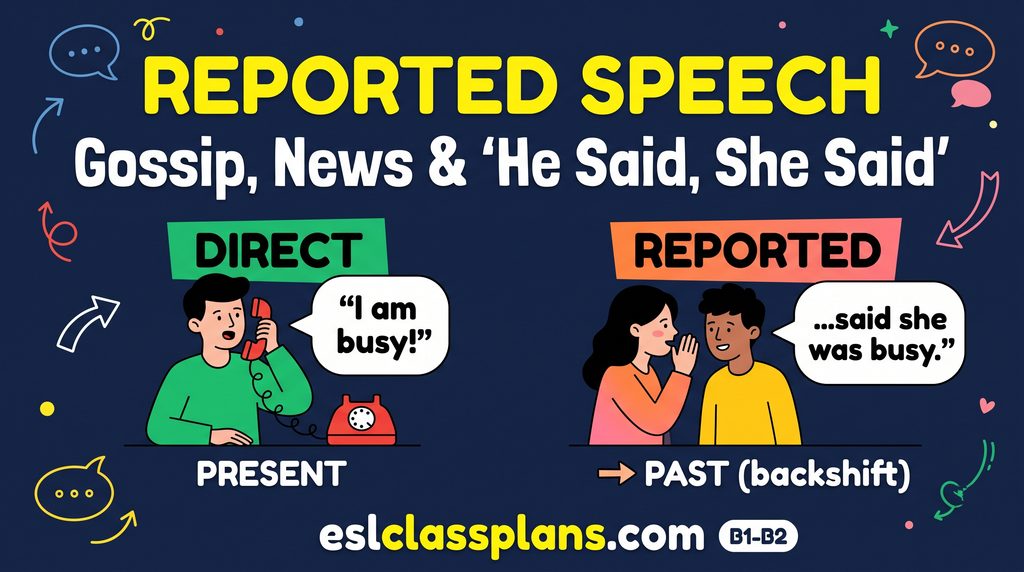
This ready-to-teach lesson plan transforms abstract backshifting charts into an engaging, communicative classroom experience using Communicative Language Teaching (CLT) and Task-Based Language Teaching (TBLT). Grounded in the universal appeal of workplace gossip and humorous grapevine communication, the lesson bridges the gap between mechanical rules and authentic social interaction.
Students begin with reflective schema-building questions before reviewing clear, patterned backshifting rules and completing targeted quote-transformation checks. The core of the lesson immerses learners in “The Office Rumor Mill,” where they step into the roles of Curious Coworker and Office Gossip to trace wild workplace rumors about company moves and free cars back to an amusing corporate reality. By framing syntax within an interactive mystery, students master the mechanics of indirect speech naturally and gain the confidence to recount events and relay messages accurately.
What’s Inside This Lesson Plan?
- Rumors & News Warm-Up Reflection: Engaging starter questions exploring how information changes through the grapevine, personal reactions to surprising secrets, and preferences between official news and casual peer updates.
- Backshifting Rules & Controlled Sentence Completion: A structured breakdown detailing how verb tenses step back into the past (Present Simple to Past Simple, Present Continuous to Past Continuous, Past Simple to Past Perfect), paired with targeted quote-transformation exercises covering concert plans, city relocations, and workplace meetings.
- “The Office Rumor Mill” Context Reading: A humorous corporate narrative describing a chaotic morning where employees misinterpret a surprise announcement from the CEO, sparking contradictory rumors about Hawaii relocations, free sports cars, and office closures.
- Three-Part “Tracing the Gossip” Role-Play: A multi-stage speaking dialogue where students pair up as the Curious Coworker and the Office Gossip to contrast exaggerated department rumors with the CEO assistant’s actual message about a new breakroom coffee machine.
Core Target Language Spotlight
This lesson builds functional accuracy by guiding learners to relay direct quotes through accurate tense backshifting, pronoun adjustments, and reported speech verbs.
- Reporting Continuous Present Rumors vs. Clarifications:
"Sarah said the company was moving our department to Hawaii."/"Tom told everyone they were just planning a tropical holiday party." - Relaying Past Actions with Past Perfect Backshifting:
"David said the CEO had bought everyone a brand-new sports car!"
Download the Ready-to-Print Classroom Handout
Equip your classroom with an adaptable, zero-prep slide deck and worksheet packet engineered for immediate delivery. Whether you are leading an in-person seminar or screen-sharing through digital platforms like Zoom or Google Meet, this complete resource includes clearly structured grammar explanations, targeted gap-fills, narrative case files, and interactive role-play scripts.
📥 Download Printable Materials
Click below to access your printable PDF classroom materials.
Teacher’s Tip for the Classroom
Implement the “Two-Step Anchor” method to eliminate cognitive overload during indirect speech transformations. When learners attempt to backshift verbs and reorient pronouns at the same time, they frequently stumble. Teach them to first identify the original speaker’s point of view to lock in the subject pronouns (e.g., “We are moving” $\rightarrow$ Who is ‘we’? They), and then apply the “One Step Back” temporal rule to the main auxiliary (are moving $\rightarrow$ were moving). Additionally, emphasize the structural difference between say and tell before the role-play begins: remind students that tell must always take a direct personal object (“They told us…”), whereas say connects directly to the reported clause (“She said that…”).